

Baking with kids brings joy and creates lasting memories but it can feel challenging when dairy allergies or intolerances enter the mix. We know that finding tasty alternatives while keeping young bakers excited isn't always easy. How can we make dairy-free baking both fun and delicious?
We've discovered that dairy-free baking opens up a world of creative possibilities for children. From using coconut milk in cupcakes to almond milk in cookies our little bakers can still enjoy all their favorite treats. By focusing on simple substitutions and kid-friendly recipes we'll help transform your kitchen into a safe and exciting space where every child can participate in the magic of baking.
Key Takeaways
- Plant-based alternatives like almond milk, oat milk, and coconut milk can effectively replace dairy in baking while maintaining taste and texture
- Common dairy-free substitutes include coconut oil for butter, mashed bananas for eggs, and applesauce for moisture in baked goods
- Reading ingredient labels carefully is crucial to identify hidden dairy sources like casein, whey, and lactose when baking for kids with allergies
- Kid-friendly dairy-free recipes like chocolate chip cookies, birthday cupcakes, and banana bread can be made using simple substitutions
- Proper storage techniques in airtight containers, refrigeration for frosted items, and freezing can help preserve dairy-free baked goods for longer periods
- Creating a safe baking environment with proper tools, supervision, and engaging activities helps make dairy-free baking fun and educational for children
Understanding Dairy-Free Ingredients for Baking
Dairy-free baking transforms traditional recipes with plant-based alternatives that maintain texture and taste. These substitutions create delicious treats while accommodating dairy allergies and intolerances.
Common Dairy Substitutes
Plant-based milk options serve as direct replacements for dairy milk in baking:
- Almond milk adds a light nutty flavor to cakes and muffins
- Oat milk creates rich textures in bread and cookies
- Coconut milk provides fat content for moist baked goods
- Soy milk offers protein for structure in pastries
For butter alternatives:
- Coconut oil works in pie crusts and cookies
- Applesauce reduces fat in quick breads
- Mashed bananas add moisture to brownies
- Avocado creates richness in chocolate recipes
Reading Labels for Hidden Dairy
These dairy ingredients appear frequently on labels:
- Casein or sodium caseinate
- Whey protein or whey powder
- Lactose or milk solids
- Natural flavors containing milk derivatives
Key label-reading tips:
- Check "Contains" statements at the bottom of ingredient lists
- Look for "dairy-free" certification symbols
- Contact manufacturers about unclear ingredients
- Review facility statements about shared equipment
| Common Term | Hidden Dairy Source |
|---|---|
| Lactalbumin | Milk protein |
| Recaldent | Milk protein complex |
| Ghee | Clarified butter |
| Rennet | Milk enzyme |
Essential Pantry Items for Dairy-Free Baking
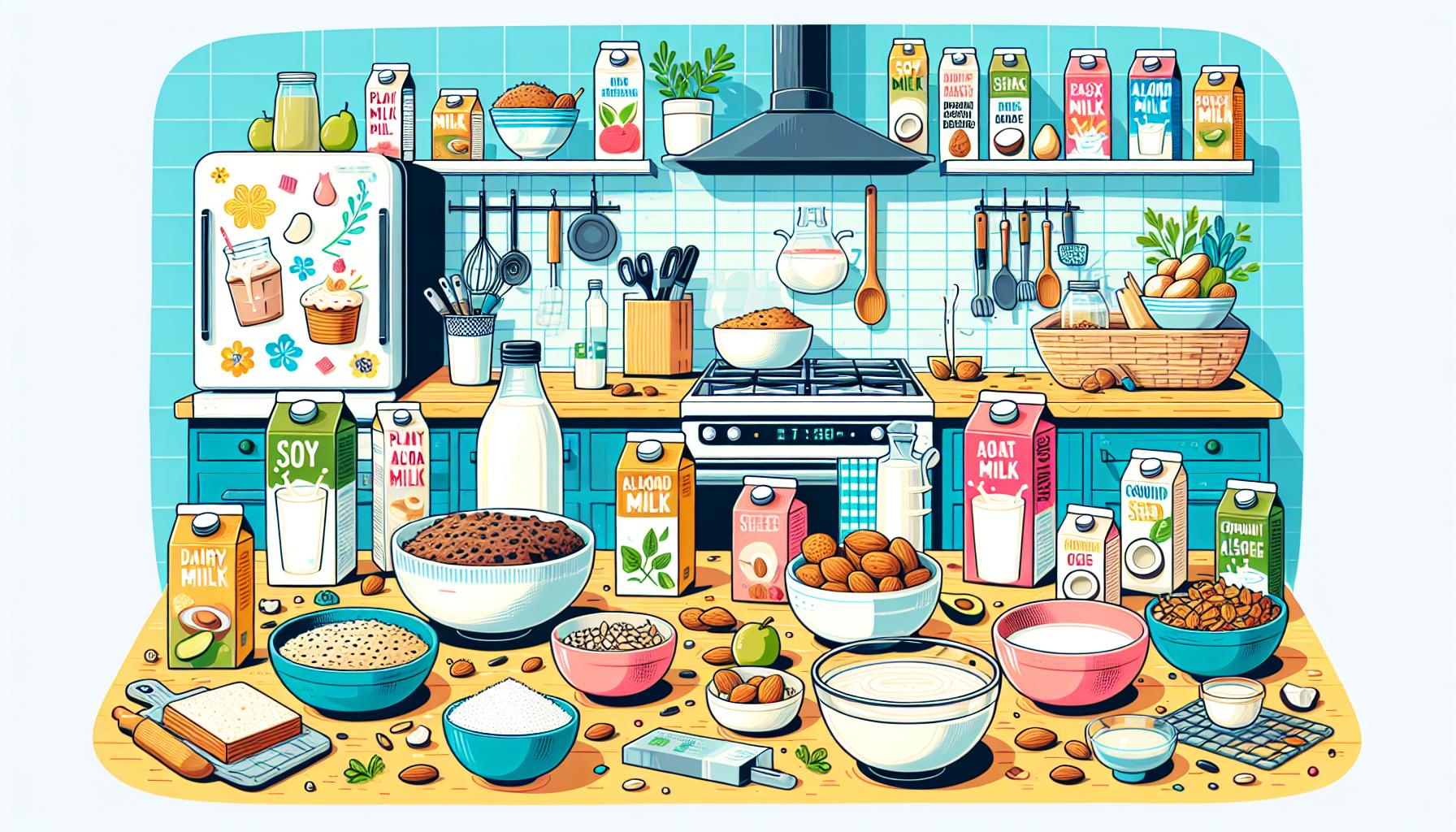
Stocking a dairy-free pantry creates endless possibilities for delicious baked goods. Here's a comprehensive guide to the essential ingredients that make dairy-free baking successful.
Plant-Based Milk Options
Plant-based milks form the foundation of dairy-free baking. These alternatives deliver specific textures and flavors:
- Soy milk: Contains protein content similar to dairy milk making it ideal for cakes
- Almond milk: Adds subtle nutty notes perfect for cookies and muffins
- Oat milk: Creates rich textures in breads and pastries
- Coconut milk: Provides creaminess for frostings and dense cakes
- Rice milk: Offers neutral flavor for delicate baked goods
| Milk Type | Best Used In | Key Benefits |
|---|---|---|
| Soy | Cakes, Breads | High protein, neutral taste |
| Almond | Cookies, Muffins | Low calories, nutty flavor |
| Oat | Breads, Pastries | Creamy texture, fiber-rich |
| Coconut | Frostings, Dense Cakes | Rich taste, thick consistency |
| Rice | Light Pastries | Allergy-friendly, mild flavor |
Egg and Butter Alternatives
Dairy-free baking relies on specific substitutes for traditional binding and fat ingredients:
Egg Replacers:
- Ground flaxseed (1 tbsp + 3 tbsp water = 1 egg)
- Mashed banana (¼ cup = 1 egg)
- Commercial egg replacer
- Applesauce (¼ cup = 1 egg)
- Aquafaba (3 tbsp = 1 egg)
- Coconut oil for flaky pastries
- Avocado oil for neutral-flavored baked goods
- Plant-based margarine for spreads
- Applesauce for reducing fat content
- Mashed avocado for moisture retention
| Substitute | Measurement | Replaces |
|---|---|---|
| Ground Flaxseed | 1 tbsp + 3 tbsp water | 1 egg |
| Coconut Oil | 1:1 ratio | Butter |
| Applesauce | ¼ cup | 1 egg or ½ cup butter |
| Mashed Banana | ¼ cup | 1 egg |
| Aquafaba | 3 tbsp | 1 egg |
Kid-Friendly Dairy-Free Baking Recipes

Dairy-free baking creates delicious treats while accommodating dietary restrictions. These recipes transform classic favorites into allergen-friendly delights that kids love to make and eat.
Chocolate Chip Cookies
Crispy on the outside yet chewy on the inside, these dairy-free chocolate chip cookies satisfy sweet cravings. Mix plant-based butter with brown sugar for 3 minutes until fluffy. Add vanilla extract and dairy-free chocolate chips to create the perfect cookie dough texture. Kids can help roll the dough into 12 evenly-sized balls before baking at 350°F for 10-12 minutes.
Birthday Cupcakes
Light and fluffy dairy-free cupcakes bring joy to any celebration. Replace traditional milk with oat milk for extra moisture and coconut oil for richness. Let kids measure 2 cups of flour, 1 cup of sugar and mix the dry ingredients. Top cooled cupcakes with dairy-free buttercream made from plant-based butter and powdered sugar. Sprinkles add a festive touch that kids can decorate with.
Banana Bread
This moist banana bread recipe uses 3 ripe mashed bananas as a natural egg replacer. Mix coconut oil with brown sugar until combined. Add vanilla extract and fold in flour mixture gradually. Kids practice kitchen skills by mashing bananas and stirring ingredients together. Pour into a greased 9x5 loaf pan and bake at 350°F for 55-60 minutes until golden brown.
| Recipe | Baking Temperature | Baking Time | Key Substitutions |
|---|---|---|---|
| Chocolate Chip Cookies | 350°F | 10-12 minutes | Plant-based butter |
| Birthday Cupcakes | 350°F | 18-20 minutes | Oat milk, coconut oil |
| Banana Bread | 350°F | 55-60 minutes | Mashed bananas, coconut oil |
Tips for Successful Dairy-Free Baking with Kids
Dairy-free baking with kids creates opportunities for learning valuable kitchen skills while making delicious treats. These practical tips help create a safe engaging environment for young bakers.
Kitchen Safety Guidelines
- Keep a step stool or sturdy platform for kids to safely reach countertops
- Store sharp tools out of reach in a designated area
- Review proper hand washing techniques before handling ingredients
- Demonstrate safe oven mitt usage for hot pans
- Place mixing bowls away from counter edges
- Supervise use of electric mixers equipment
- Clean spills immediately to prevent slips
- Keep a first aid kit accessible in the kitchen
- Post emergency numbers in a visible location
- Practice proper food handling hygiene
- Turn measuring into a math lesson by comparing fractions
- Explain chemical reactions like how baking soda works
- Create a taste test station for different dairy-free milks
- Let kids decorate treats with dairy-free toppings
- Set up assembly line stations for multiple tasks
- Use child-sized tools in bright colors
- Time mixing activities with fun countdown games
- Label ingredients with pictures for pre-readers
- Take photos of finished treats to track progress
- Award "baker badges" for mastering new skills
| Educational Element | Learning Opportunity |
|---|---|
| Measuring | Fractions math practice |
| Mixing | Motor skill development |
| Following recipes | Reading comprehension |
| Kitchen science | Chemical reactions |
| Decorating | Creative expression |
Storing and Freezing Dairy-Free Baked Goods
Proper storage extends the life of dairy-free treats, keeping them fresh for kids to enjoy. Different storage methods work best for specific baked goods:
Counter Storage
Dairy-free cookies, muffins, quick breads maintain optimal freshness in airtight containers at room temperature for 3-5 days. Here's what works for common treats:
- Store cookies in tin containers with wax paper between layers
- Place muffins in plastic containers with paper towels to absorb moisture
- Wrap quick breads tightly in plastic wrap or foil
- Keep cupcakes under cake domes for 2-3 days
Refrigerator Storage
Frosted items stay fresh longer in the refrigerator. Storage guidelines for chilled treats:
- Pack frosted cupcakes in covered containers up to 5 days
- Store cream-based fillings or toppings at 40°F or below
- Remove items 30 minutes before serving for best texture
- Use airtight containers to prevent absorption of fridge odors
Freezer Storage
Most dairy-free baked goods freeze well for 2-3 months. Follow these freezing tips:
- Cool items completely before freezing
- Double wrap in plastic wrap and foil
- Label packages with contents and date
- Store flat to prevent crushing
| Baked Good | Room Temp | Refrigerator | Freezer |
|---|---|---|---|
| Cookies | 5 days | 2 weeks | 3 months |
| Muffins | 3 days | 1 week | 2 months |
| Quick Breads | 4 days | 1 week | 3 months |
| Frosted Cupcakes | 2 days | 5 days | 2 months |
- Thaw at room temperature for 2-3 hours
- Unwrap completely to prevent condensation
- Heat briefly in microwave for 10-15 seconds if desired
- Transfer larger items to refrigerator overnight
Conclusion
Dairy-free baking with kids opens up a world of delicious possibilities and cherished memories. We've seen how simple substitutions and creative alternatives can transform traditional recipes into allergy-friendly treats that everyone can enjoy. By embracing these methods we're not just creating tasty treats - we're building confidence encouraging creativity and fostering valuable life skills in our young bakers.
Remember that the journey of dairy-free baking is as rewarding as the destination. With the right ingredients tools and knowledge we can help our children discover the joy of baking while keeping them safe and engaged. Let's get started on this exciting culinary adventure with our little ones!
Frequently Asked Questions
What are the best dairy-free milk alternatives for baking?
The most versatile dairy-free milk alternatives for baking include almond milk, oat milk, soy milk, and coconut milk. Each offers unique properties: almond milk provides a light nutty flavor, oat milk creates rich textures, soy milk works well in most recipes, and coconut milk adds richness to desserts. Choose based on the specific recipe requirements and personal taste preferences.
How can I ensure my dairy-free baked goods stay moist?
Use ingredients that add moisture such as mashed bananas, applesauce, or plant-based yogurt. Coconut oil or dairy-free butter alternatives help maintain moisture content. Don't overbake your treats, as dairy-free baked goods can dry out more quickly than traditional recipes. Always follow recipe instructions carefully for best results.
What safety precautions should I take when baking with kids?
Provide a sturdy step stool for proper counter access, keep sharp tools out of reach, and supervise the use of electric mixers. Teach proper hand washing and food safety practices. Always monitor oven use and handle hot items yourself. Create a designated kid-safe workspace with easy-to-use tools and equipment.
How long do dairy-free baked goods last?
Most dairy-free baked goods last 3-5 days at room temperature when properly stored in airtight containers. Refrigeration can extend shelf life to 7-10 days. For longer storage, most items can be frozen for up to 3 months. Always ensure baked goods are completely cool before storing to prevent condensation.
What are common hidden dairy ingredients to watch out for?
Watch for ingredients like casein, whey, lactose, milk solids, and milk protein isolate. Other terms include lactalbumin, lactoglobulin, and rennet. Always read ingredient labels carefully and look for products specifically labeled as dairy-free. When in doubt, contact the manufacturer for clarification.
How can I make baking educational for kids?
Transform baking into a learning experience by incorporating math through measuring ingredients, reading comprehension through following recipes, and science through understanding chemical reactions. Use decorating time for creative expression and color recognition. Discuss kitchen safety and cleanliness to build responsibility.
What is the best egg substitute for dairy-free baking?
Ground flaxseed mixed with water (1 tablespoon + 3 tablespoons water) works well as an egg replacer. Mashed bananas, applesauce, or commercial egg replacers are also effective options. Choose based on the recipe type - denser baked goods work better with fruit-based substitutes, while lighter items may need commercial replacers.
How do I store dairy-free baked goods in the freezer?
Cool items completely before wrapping tightly in plastic wrap or foil. Place in freezer-safe containers or bags, removing as much air as possible. Label with the date and contents. Most items freeze well for up to 3 months. Thaw at room temperature before serving.


