


Key Takeaways
- Free homeschooling resources offer affordable and effective tools to support diverse educational needs and learning styles.
- These resources promote flexibility, allowing parents to tailor lesson plans and teaching methods to their child’s unique pace and interests.
- Options like printable worksheets, educational websites, and virtual learning tools make lessons engaging and interactive.
- All-in-one platforms simplify homeschool planning with pre-designed curricula and tracking features for organized teaching.
- Subject-specific resources and tools for special needs students ensure inclusivity and deeper learning in areas like math, science, and arts.
- Parents can maximize these free resources by setting clear goals, tracking progress, and incorporating a variety of formats for comprehensive learning.
Homeschooling can feel like a big leap, especially when you're trying to balance quality education with affordability. Many of us worry about finding resources that are both effective and accessible without breaking the bank. The good news? There’s an abundance of free tools available to support every learning style and subject need.
Have you ever wondered how to create a rich learning environment at home without spending a fortune? From lesson plans to interactive activities, free homeschooling resources can open up endless possibilities for your child’s education. Together, we can explore options that make homeschooling both rewarding and manageable. Let’s dive into the many ways to make learning at home exciting, engaging, and cost-free.
Benefits Of Using Free Homeschooling Resources
Free homeschooling resources bridge the gap between quality education and affordability. They provide parents with tools to teach effectively without financial strain. These resources often cover various subjects and teaching methods, making them adaptable to individual learning needs.
Promote Accessibility
Free materials make education accessible for families with limited budgets. Whether it's printable worksheets, educational videos, or interactive apps, these options eliminate cost barriers while offering diverse learning experiences.
Encourage Flexibility
Free tools allow parents to adjust lesson plans easily. They can explore multiple formats, like online courses or activity guides, to match their child's interests and learning pace.
Support Diverse Learning Styles
Every child learns differently. Free resources cater to auditory, visual, and kinesthetic learners with options such as podcasts, documentaries, or hands-on experiments.
Reduce Pressure on Families
Without financial commitments, free resources ease the pressure many families feel in maintaining a consistent educational path. Parents can focus on quality teaching rather than stretching budgets.
Offer Variety and Depth
Free options cover a broad spectrum of topics. From science kits to coding tutorials, parents can provide in-depth learning without needing expensive programs.
Are you finding ways to balance education costs with personalized learning? Options like these could provide the balance you're looking for.
Categories Of Free Homeschooling Resources
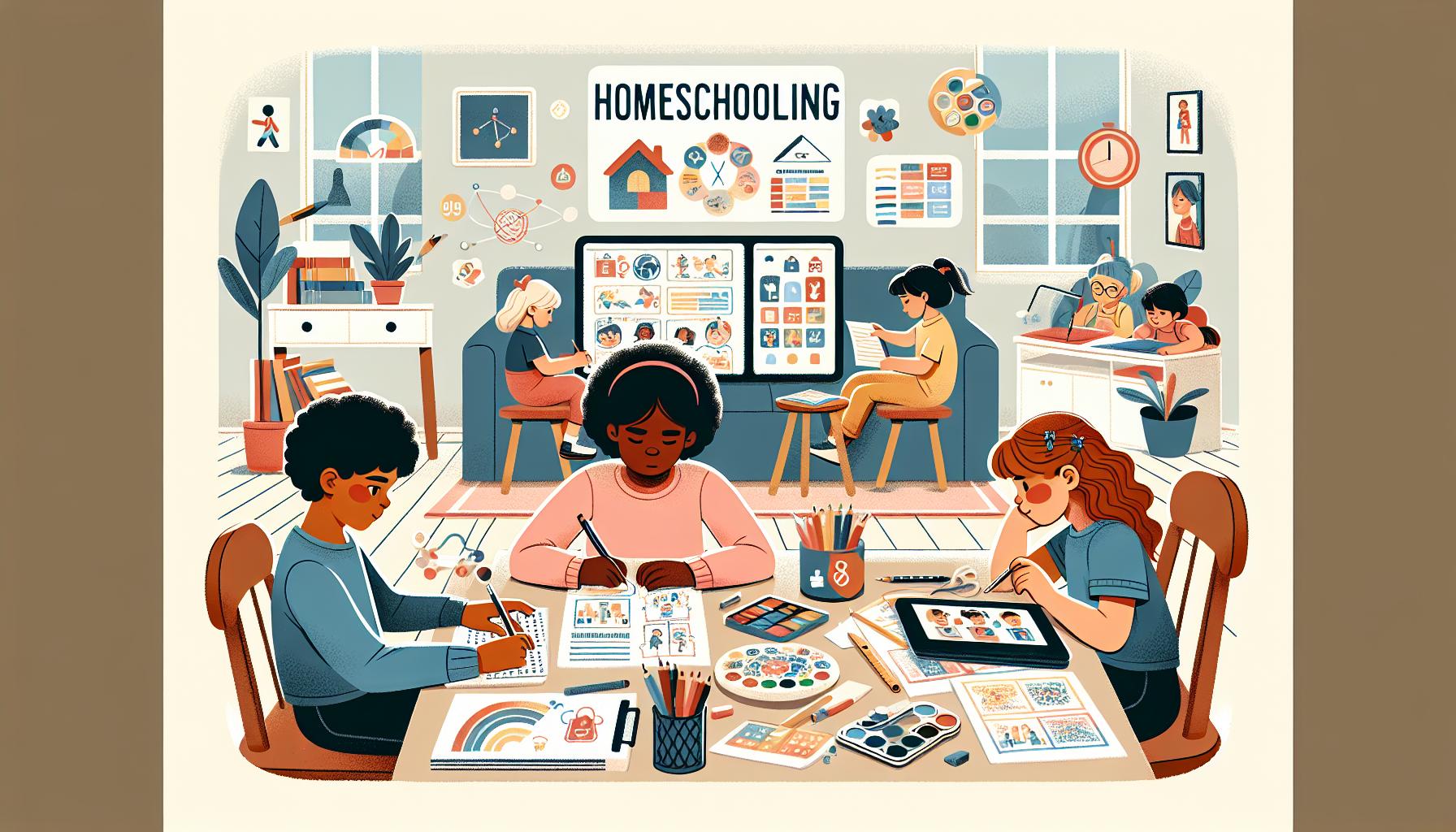
Free homeschooling resources help parents create engaging, budget-friendly educational experiences. Each category serves different learning needs and styles, accommodating families' diverse requirements.
Curriculum And Lesson Plans
Comprehensive lesson plans guide parents through subject content efficiently. Free curricula cover various grades and subjects, including math, science, history, and language arts. Some resources align with state standards, while others are more flexible, allowing self-paced learning.
Parents can access pre-structured plans or mix and match resources to personalize learning. For example, they might combine online lesson guides with unit studies focused on specific topics. What topics or formats fit your teaching goals best?
Educational Websites And Platforms
Websites offer interactive tools to reinforce critical skills. Many platforms provide materials like videos, quizzes, and games to supplement lessons. Subjects often include STEM, reading, and foreign languages.
Interactive elements keep children engaged, especially for visual or auditory learners. Parents can search for platforms that offer free trials, open educational content, or public resources. Does your child learn better with hands-on activities or digital tools?
Printable Worksheets And Activities
Worksheets simplify practice in core subjects through exercises, puzzles, and review sheets. Free printables may include basic alphabet work for younger children or advanced algebra for older students. Activities like coloring pages or vocabulary crosswords can also enhance creativity.
These resources are easy to incorporate into daily schedules. Parents can download printables by grade or skill level to match their child's progress. Have you explored worksheets for quick, effective learning reinforcement?
Virtual Learning Tools
Virtual tools like apps, video lessons, and simulators make homeschooling interactive. They support subjects needing detailed demonstrations, like physics experiments or art tutorials. Many tools include real-time feedback or assessments to track progress.
Parents can use these tools to maintain engagement while building essential skills. Video-based platforms often cater to different ages and learning objectives. Which tools work best for keeping your child motivated?
Top Recommended Free Homeschooling Resources

Free homeschooling resources provide valuable support for families striving to deliver quality education at home. Let’s explore top options that cover specific subjects, all-in-one platforms, and tools for students with special needs.
Subject-Specific Resources
Subject-focused resources help deepen understanding in areas like math, science, and language arts. For math, free lesson plans, video tutorials, and interactive tools clarify concepts and reinforce skills. Science enthusiasts benefit from virtual labs, experiment guides, and digital simulations that make exploration engaging. Language arts resources include free reading materials, grammar practice sheets, and creative writing prompts. Are there particular subjects where your child could use extra support?
History and geography resources encourage critical thinking through access to free timelines, primary source materials, and map activities. Music and art tools like sheet music, instructional videos, and drawing tutorials allow children to develop creativity. These resources empower parents to tailor learning to their child’s needs across diverse topics.
All-In-One Homeschooling Platforms
Comprehensive platforms simplify homeschool planning by offering structured courses across grade levels. Many include interactive assignments, quizzes, and tracking tools to monitor progress. Parents can access free, pre-designed curricula covering essential subjects while enjoying the flexibility to adapt lessons for different learning paces.
These platforms typically provide step-by-step instructions and multimedia elements, like videos and animations, to maintain engagement. Whether teaching multiple children or focusing on one, such resources allow for smoother organization and personalized teaching strategies. Which features would most ease your homeschooling journey?
Resources For Special Needs Students
Free tools designed for students with special needs help make education inclusive. Visual schedules, communication boards, and adaptive learning software support children with diverse abilities. Reading assistance programs and motion-based learning games help address various challenges while making learning enjoyable.
Many platforms offer specialized lesson plans that parents can adjust to suit cognitive or sensory needs. Social-emotional learning activities available for free also foster self-awareness and interpersonal skills. Are there specific tools you’re looking for to make homeschooling more accessible for your child?
Tips For Effectively Using Free Homeschooling Resources
Maximize free homeschooling resources by creating an organized plan. Start by identifying your child's learning goals and selecting tools that align with those objectives. Use a mix of formats like printable worksheets, interactive apps, and videos to keep lessons engaging.
Track progress regularly to assess how well the resources meet your child's needs. Maintain a simple record of topics covered and skills mastered. Adjust your approach if a resource isn't delivering the expected results.
Encourage flexibility in scheduling. Since free tools often allow self-paced learning, adapt lesson times to your child's energy levels and focus periods. Morning practice sheets or evening video lessons can make learning more effective.
Set clear expectations for resource usage. Explain to your child how and when certain tools will be used. For example, designate app time for interactive exercises or use specific days for hands-on activities.
Engage with your child during lessons. Participate in experiments or discussions prompted by educational videos or worksheets. Showing interest fosters a collaborative learning environment and strengthens understanding.
Leverage online communities for support and ideas. Many parents share experiences and strategies for using free resources effectively. Joining discussions highlights new tools and provides helpful insights.
Consider combining resources for a well-rounded curriculum. Pair math games with science experiments or language arts lessons with reading apps. This approach strengthens cross-subject connections and enhances comprehensive learning.
Conclusion
Homeschooling doesn’t have to be overwhelming or expensive when we have access to so many free resources. By exploring the tools available, we can create a dynamic and personalized learning experience that meets our children’s unique needs. These resources not only make education affordable but also open the door to creativity and flexibility in how we teach.
Let’s embrace the opportunities these tools provide and focus on nurturing a love for learning in our homes. With a little planning and the right mix of resources, we can build an enriching educational journey that benefits both our children and our families.
Frequently Asked Questions
What are the main challenges of homeschooling mentioned in the article?
Homeschooling challenges include balancing quality education with affordable costs, finding effective resources, and catering to diverse learning styles while managing finances.
How can free homeschooling resources help parents save money?
Free resources reduce financial pressure by offering access to quality educational tools like worksheets, videos, and apps—helping parents avoid costly materials.
What types of free homeschooling resources are available?
The article highlights comprehensive lesson plans, printable worksheets, educational websites, interactive apps, video lessons, and special needs tools as key free resources.
How do free resources support diverse learning styles?
They provide options for auditory, visual, and kinesthetic learners through videos, interactive apps, and hands-on activities, ensuring personalized learning experiences.
Are there any specific free resources for special needs students?
Yes, the article recommends visual schedules, adaptive learning tools, and inclusive apps that cater to various abilities for effective, tailored learning.
What are the benefits of using all-in-one homeschooling platforms?
These platforms offer structured courses, interactive lessons, tracking tools, and streamlined planning, simplifying the homeschooling process for parents.
How can parents effectively use homeschooling resources?
The article suggests setting learning goals, mixing resource formats, tracking progress, staying flexible, and engaging with children during lessons for optimal results.
What is the role of online communities in homeschooling?
Online communities provide support, resource sharing, and advice, helping parents improve their approach and connect with other homeschooling families.
How can parents keep homeschooling lessons engaging?
Incorporate diverse resource formats, focus on interactive and fun tools, and adapt lessons to match children’s interests and energy levels.
Why is flexibility important when homeschooling?
Flexibility allows parents to adjust lessons and schedules to their child’s pace and needs, ensuring a more enjoyable and effective learning experience.


