

Teaching kids to bake gluten-free treats can be both fun and rewarding. We've seen how transformative it can be when children with dietary restrictions discover they can still enjoy delicious baked goods. It's a skill that builds confidence and creates lasting memories in the kitchen.
Baking without gluten doesn't mean compromising on taste or enjoyment. From cookies to cupcakes and seasonal treats, there are countless ways for young bakers to explore and create mouthwatering gluten-free desserts. Have you ever wondered how to make your child's baking experience both safe and exciting? We'll show you simple techniques and tips that make gluten-free baking accessible for kids of all skill levels, while helping them learn essential kitchen skills along the way.
Key Takeaways
- Gluten-free baking requires specific flour blends and binding ingredients like xanthan gum, chia seeds, or psyllium husk to replace traditional gluten structure
- Using dedicated gluten-free tools, storage containers, and preparation areas is essential to prevent cross-contamination when baking with kids
- Kid-friendly recipes like chocolate chip cookies and cupcakes can be made gluten-free by using the right flour combinations and following proper measurement ratios
- Making gluten-free baking fun involves engaging kids with age-appropriate tasks, decorating opportunities, and interactive learning elements while maintaining kitchen safety
- Proper storage in airtight containers and understanding shelf life for different treats helps maintain freshness and quality of gluten-free baked goods
Understanding Gluten-Free Baking Basics
Gluten-free baking requires specific ingredients and techniques to create delicious treats kids love. Here's what parents and kids need to know about the fundamental elements of gluten-free baking.
Essential Gluten-Free Flour Blends
Gluten-free baking starts with the right combination of alternative flours. A balanced flour blend provides structure and texture to baked goods.
Common Gluten-Free Flours:
- Rice flour creates light textures in cakes and cookies
- Almond flour adds moisture and protein to muffins and breads
- Oat flour brings natural sweetness to breakfast treats
- Coconut flour absorbs moisture in dense baked goods
- Tapioca flour helps create chewy textures in breads
Recommended Flour Ratios:
| Base Flour | Binding Flour | Texture Flour |
|---|---|---|
| 50% Rice | 25% Tapioca | 25% Almond |
| 40% Oat | 30% Potato | 30% Coconut |
Key Binding Ingredients
Binding ingredients replace the structure gluten provides in traditional baking. These ingredients keep treats from becoming crumbly.
- Xanthan gum (1/4 tsp per cup of flour)
- Ground chia seeds mixed with water
- Psyllium husk powder for bread recipes
- Beaten eggs or egg substitutes
- Mashed bananas or applesauce
- Mix dry ingredients thoroughly before adding wet ingredients
- Let batters rest for 15 minutes before baking
- Store flours in airtight containers in cool places
- Measure ingredients by weight instead of volume
- Test doneness 5 minutes before recipe suggests
Kid-Friendly Gluten-Free Recipe Ideas

These simple gluten-free recipes transform baking into an exciting activity for kids while creating delicious treats everyone can enjoy. Each recipe features easy-to-follow steps perfect for young bakers.
Easy Chocolate Chip Cookies
Our gluten-free chocolate chip cookies combine a blend of rice flour and almond flour for a chewy texture kids love. Mix 2 cups gluten-free flour blend with 1 teaspoon xanthan gum, ½ teaspoon baking soda and ¼ teaspoon salt. Cream 1 cup butter with brown sugar, add 2 eggs and vanilla extract. Fold in chocolate chips. Let kids roll dough into balls and press gently. Bake at 350°F for 12 minutes until golden brown edges appear.
Simple Birthday Cupcakes
Create celebratory gluten-free cupcakes using oat flour and coconut flour for a light, fluffy texture. Combine 1¾ cups gluten-free flour mix with 1 teaspoon baking powder and ½ teaspoon xanthan gum. In a separate bowl, mix 2 eggs, 1 cup milk and ½ cup oil. Blend wet and dry ingredients until smooth. Fill cupcake liners ⅔ full and bake at 350°F for 18-20 minutes. Kids can decorate cooled cupcakes with naturally colored frosting and sprinkles.
- Mini pepperoni
- Shredded mozzarella
- Pineapple chunks
- Bell pepper shapes
- Cherry tomatoes
| Recipe | Prep Time | Bake Time | Kid-Friendly Tasks |
|---|---|---|---|
| Chocolate Chip Cookies | 15 mins | 12 mins | Rolling dough, pressing cookies |
| Birthday Cupcakes | 20 mins | 20 mins | Mixing batter, decorating |
| Pizza Crust | 25 mins | 18 mins | Kneading dough, adding toppings |
Safety Tips for Baking With Kids
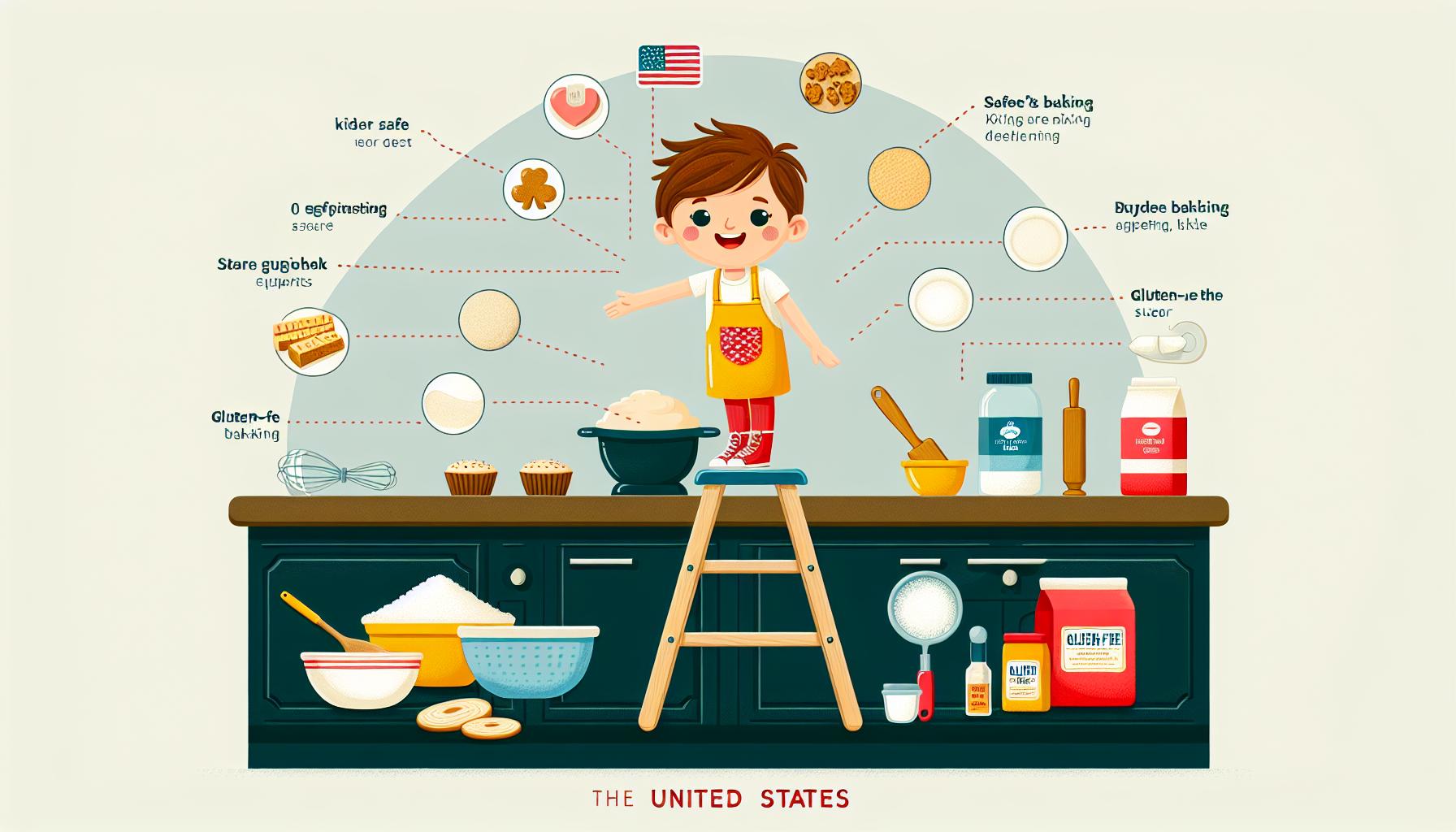
Baking with kids requires careful attention to both kitchen safety and gluten-free ingredient handling. Creating a safe baking environment helps children develop confidence while learning essential kitchen skills.
Kitchen Safety Guidelines
- Place ingredients at child height on a sturdy, slip-free surface
- Keep hot surfaces off-limits with clear markers or barriers
- Store sharp utensils in designated locked drawers
- Supervise the use of electric mixers with proper cord management
- Set clear rules about washing hands before touching ingredients
- Teach proper oven mitt usage for handling warm baking sheets
- Keep a step stool or learning tower secured for reaching counters
- Install childproof locks on cabinets containing cleaning supplies
- Designate separate mixing bowls marked "gluten-free only"
- Use distinct measuring cups for gluten-free ingredients
- Clean all surfaces thoroughly before starting
- Store gluten-free ingredients in sealed containers
- Label gluten-free tools with colored tape or markers
- Keep a separate sponge or cloth for gluten-free equipment
- Use parchment paper on shared baking sheets
- Maintain a dedicated gluten-free preparation area
| Safety Equipment | Purpose |
|---|---|
| Oven Mitts | Heat protection |
| Step Stool | Safe reaching |
| Storage Labels | Ingredient identification |
| Parchment Paper | Cross-contamination barrier |
The content above focuses on practical safety measures while maintaining an engaging tone for both parents and children. Each guideline addresses specific concerns related to kitchen safety and gluten-free baking, presented in clear, actionable steps.
Making Gluten-Free Baking Fun
Gluten-free baking creates memorable moments for kids through hands-on activities. Pre-measured ingredients paired with clear instructions transform kitchen time into an engaging experience.
Decorating and Customization
Colorful toppings add excitement to gluten-free treats. Kids can express creativity with naturally gluten-free decorations:
- Sprinkle shredded coconut on cupcakes for snow effects
- Create designs with fresh fruit pieces
- Mix food coloring into frosting for vibrant colors
- Add chocolate chips in patterns
- Top with crushed nuts or seeds for texture
Involving Kids in the Process
Simple tasks keep children engaged throughout the baking process. Here's how to include kids safely:
- Assign age-appropriate tasks like pouring pre-measured ingredients
- Let them mix dry ingredients in separate bowls
- Guide them in rolling cookie dough into balls
- Show proper techniques for using cookie cutters
- Teach cleaning habits by wiping surfaces between steps
Interactive elements make the process educational:
- Count ingredients together
- Name colors of different ingredients
- Practice reading recipe steps aloud
- Measure ingredients using kid-friendly tools
- Time baking intervals with a timer
- Place ingredients at child height
- Use clear containers for easy identification
- Label storage containers with pictures
- Keep sessions under 30 minutes
- Break complex recipes into smaller steps
Storing and Preserving Gluten-Free Treats
Proper storage techniques preserve the freshness and prevent cross-contamination of gluten-free baked goods. Our storage guide helps maintain the texture and taste of these special treats while keeping them safe for kids with gluten sensitivities.
Best Storage Containers
Airtight containers protect gluten-free baked goods from moisture and extend their shelf life. Glass or BPA-free plastic containers with snap-on lids create an ideal environment for storing treats. Here's what to look for in storage containers:
- Containers with rubber seals to lock out air
- Clear containers to identify contents easily
- Stackable designs to maximize pantry space
- Different sizes for various portions (small for individual servings large for batch storage)
- Dishwasher-safe materials for easy cleaning
Shelf Life Tips
Gluten-free treats have specific storage needs to maintain their quality. Here's how long different items last:
| Type of Treat | Room Temperature | Refrigerator | Freezer |
|---|---|---|---|
| Cookies | 3-4 days | 7-10 days | 3 months |
| Cupcakes | 2-3 days | 5-7 days | 2 months |
| Breads | 2 days | 5 days | 1 month |
| Muffins | 2-3 days | 7 days | 2 months |
- Label containers with baking dates
- Place parchment paper between layers of cookies
- Cool treats completely before storing
- Store different flavors separately to prevent taste transfer
- Keep treats away from direct sunlight or heat sources
- Use freezer-safe bags to prevent freezer burn
- Thaw frozen treats at room temperature for 2 hours
Conclusion
Gluten-free baking with kids opens up a world of delicious possibilities and cherished memories. We've shown that with the right ingredients techniques and safety measures anyone can create amazing treats that are safe for children with gluten sensitivities.
By involving kids in the baking process we're not just making delicious snacks – we're building their confidence and teaching valuable life skills. Remember that success in gluten-free baking comes from careful preparation proper storage and a dash of creativity.
Let's embrace the joy of gluten-free baking with our little ones and watch them discover the magic of creating their own special treats. Happy baking!
Frequently Asked Questions
What makes gluten-free baking different from regular baking?
Gluten-free baking requires specific flour blends and binding agents to replicate the structure that gluten provides in traditional baking. Common ingredients include rice, almond, oat, and coconut flours, along with xanthan gum or ground chia seeds as binders. These ingredients work together to create textures similar to regular baked goods.
How can I prevent cross-contamination when baking gluten-free treats?
Use dedicated mixing bowls, measuring cups, and utensils for gluten-free baking. Clean all surfaces thoroughly before starting, and maintain a separate preparation area. Store gluten-free ingredients away from regular flour products and always label containers clearly to prevent mix-ups.
What are some easy gluten-free recipes for kids to start with?
Simple gluten-free chocolate chip cookies and birthday cupcakes are great starting points. These recipes use basic techniques and familiar ingredients like rice flour and almond flour blends. They also offer fun opportunities for kids to participate in mixing, rolling dough, and decorating.
How long do gluten-free baked goods stay fresh?
Most gluten-free treats last 2-3 days at room temperature in airtight containers. They can be refrigerated for up to a week or frozen for 2-3 months. Always store them with parchment paper between layers and label containers with baking dates for best results.
What safety precautions should I take when baking with kids?
Supervise children when using electric mixers and ovens, ensure proper oven mitt usage, and place ingredients at child height. Create a clear workspace and teach basic kitchen safety rules. Use age-appropriate tasks and maintain constant supervision throughout the baking process.
How can I make gluten-free baking fun for children?
Involve kids in age-appropriate tasks like measuring ingredients, using cookie cutters, and decorating treats. Keep sessions under 30 minutes to maintain interest, and incorporate counting and reading activities. Allow children to customize their treats with colorful toppings and decorations.


