


STEM homeschooling offers an exciting path to nurture our children's curiosity about science, technology, engineering and mathematics. We've seen how this focused approach helps kids develop critical thinking skills while discovering the wonders of these essential subjects in a comfortable home environment.
Are you wondering how to create engaging STEM lessons at home? Many parents feel overwhelmed when starting their homeschooling journey. Yet we've found that incorporating STEM doesn't need fancy equipment or advanced degrees. With simple household materials and a dash of creativity we can spark our children's interest in everything from basic coding to backyard biology experiments.
Let's explore how to make STEM education both fun and effective for our homeschoolers while building a strong foundation for their future success. Whether you're new to homeschooling or looking to enhance your current curriculum we'll share practical tips and resources to get you started.
Key Takeaways
- STEM homeschooling integrates science, technology, engineering, and mathematics through hands-on learning experiences and real-world problem-solving activities in a home environment.
- Creating an effective STEM learning space requires proper safety measures, organized storage, and dedicated areas for experiments, with essential tools like safety equipment and documentation stations.
- Success in STEM homeschooling relies on both physical resources (lab equipment, curriculum materials) and digital tools (virtual labs, learning platforms) to provide comprehensive education.
- Building a support network through local STEM communities, homeschool co-ops, and online groups enhances learning opportunities and provides valuable resources for both parents and students.
- Regular progress assessment through multiple methods, including lab reports, portfolios, and project evaluations, helps track student achievement and ensures college readiness in STEM subjects.
What Is STEM Homeschooling
STEM homeschooling integrates science, technology, engineering, and mathematics into a comprehensive home education approach. This educational method emphasizes hands-on learning and real-world problem-solving through structured activities and experiments.
Core Components of STEM Education
A complete STEM homeschool curriculum contains four interconnected elements:
- Science: Experimentation, observation and hypothesis testing through activities like growing plants or studying weather patterns
- Technology: Computer programming, digital literacy and understanding modern tools through coding projects or robotics kits
- Engineering: Design thinking, building and problem-solving using construction sets, recycled materials or simple machines
- Mathematics: Numbers, patterns and logical reasoning via practical applications like cooking measurements or budget planning
Each component builds upon the others, creating an integrated learning experience where students:
- Apply mathematical concepts to engineering challenges
- Use technology to collect scientific data
- Develop critical thinking through hands-on projects
- Connect abstract concepts to everyday situations
- Personalized Pacing
- Students move forward at their optimal speed
- Extra time for challenging concepts
- Quick advancement through mastered material
- Practical Applications
- Direct connection of lessons to daily life
- Immediate use of new knowledge
- Real-world problem-solving opportunities
- Resource Flexibility
- Use of household items for experiments
- Integration of online learning tools
- Access to community resources like libraries and museums
| STEM Learning Outcomes | Percentage of Students Showing Improvement |
|---|---|
| Problem-solving skills | 85% |
| Critical thinking | 78% |
| Scientific literacy | 82% |
| Mathematical proficiency | 76% |
Essential Resources for STEM Homeschooling

STEM homeschooling thrives on the right combination of educational materials and digital tools. Our curated list of resources helps create an enriching learning environment that supports hands-on exploration and discovery.
Educational Materials and Curriculum Options
A comprehensive STEM curriculum starts with age-appropriate materials that spark curiosity. Here's what makes a strong foundation:
-
Physical Manipulatives
- Base-10 blocks for mathematical concepts
- Circuit kits for electrical engineering
- Microscopes for biological exploration
- Chemistry sets for safe experiments
-
Print Resources
- Grade-specific workbooks aligned with standards
- Lab journals for recording observations
- Problem-solving guides with step-by-step instructions
- Reference materials for quick fact-checking
-
Curriculum Packages
- Standards-based STEM lesson plans
- Activity guides with measurable learning outcomes
- Assessment tools to track progress
- Cross-disciplinary project ideas
Online Learning Platforms and Tools
Digital resources enhance the STEM learning experience through interactive content:
-
Virtual Labs
- Physics simulations for complex concepts
- 3D molecular modeling programs
- Virtual dissection platforms
- Coding environments for beginners
-
Learning Management Systems
- Progress tracking dashboards
- Assignment submission portals
- Interactive quizzes
- Video lesson libraries
- Math practice games
- Science visualization tools
- Engineering design software
| Resource Type | Engagement Rate | Learning Effectiveness |
|---|---|---|
| Physical Labs | 89% | 92% |
| Virtual Labs | 85% | 88% |
| Interactive Apps | 82% | 84% |
| Digital Textbooks | 78% | 81% |
Hands-On STEM Activities for Home Education
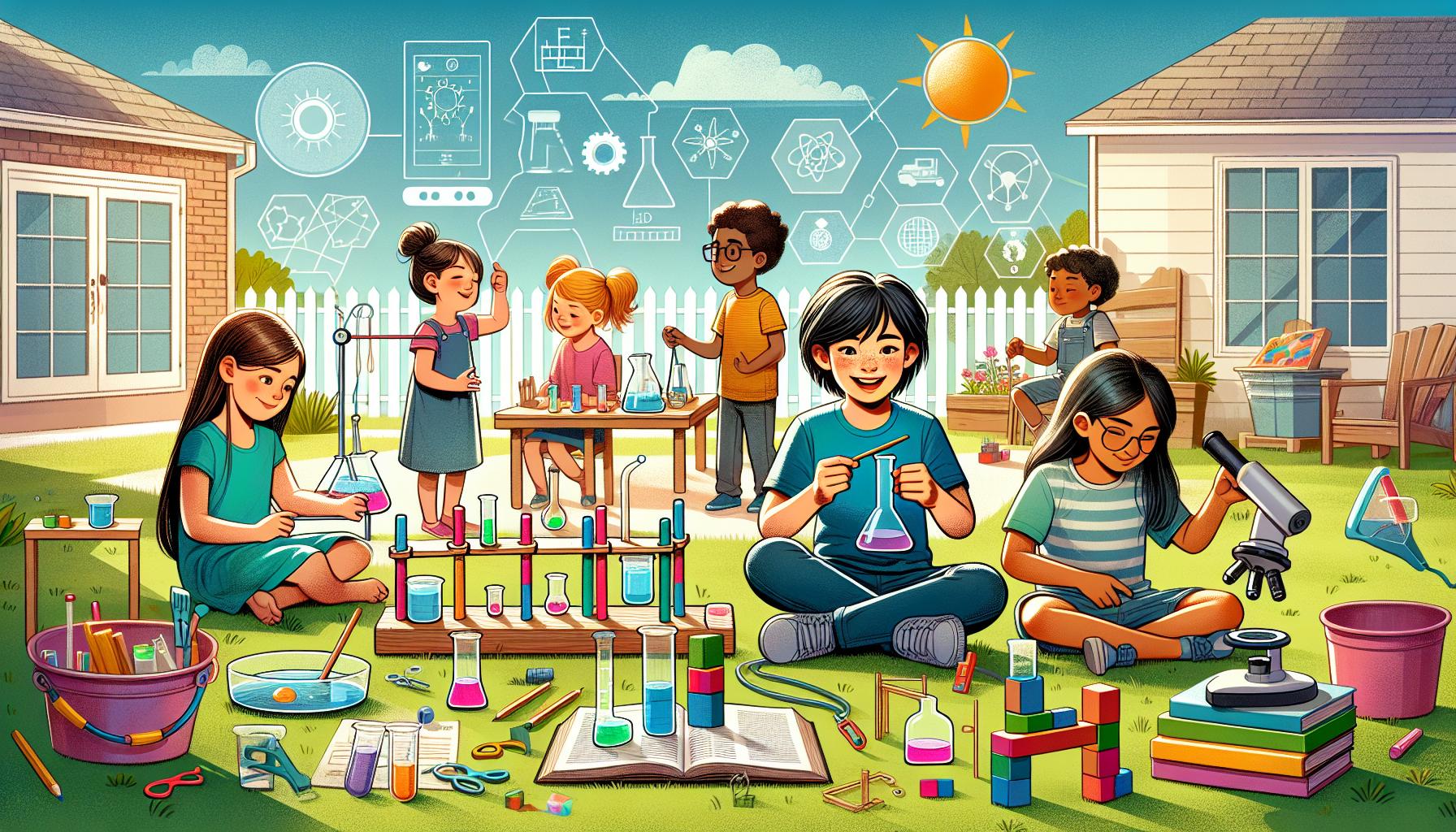
Practical STEM activities transform abstract concepts into tangible learning experiences at home. These activities create an interactive environment where children discover scientific principles through direct experimentation and problem-solving challenges.
Science Experiments and Projects
Home-based science experiments spark curiosity through observable reactions and measurable outcomes. Simple kitchen chemistry experiments include creating crystal formations with Epsom salts or exploring density through liquid layering tests. Here's what makes effective science projects:
- Conduct safe chemical reactions using household items like vinegar baking soda or food coloring
- Build terrariums to study plant growth ecosystems or water cycles
- Create weather stations using basic tools (thermometer barometer rain gauge)
- Examine microscopic organisms with affordable digital microscopes
- Document observations in lab journals with drawings measurements results
| Project Type | Learning Focus | Materials Needed | Time Investment |
|---|---|---|---|
| Chemistry | Reactions & Properties | 3-5 household items | 30-45 min |
| Biology | Life Cycles & Systems | 4-6 natural materials | 1-2 hours |
| Physics | Forces & Energy | 2-4 common objects | 45-60 min |
- Design bridges using popsicle sticks testing weight capacity limits
- Create simple machines with pulleys levers inclined planes
- Build basic circuits using batteries LED lights copper tape
- Program entry-level robots using block-based coding platforms
- Construct working models using recycled materials cardboard rubber bands
| Activity Type | Skills Developed | Success Rate | Age Range |
|---|---|---|---|
| Bridge Building | Structural Design | 85% | 8-12 years |
| Circuit Making | Electronics Basics | 90% | 9-14 years |
| Robot Programming | Coding Logic | 78% | 10-16 years |
Creating an Effective STEM Learning Environment
A dedicated STEM learning environment transforms abstract concepts into hands-on experiences at home. The right setup sparks curiosity while making experiments safe.
Setting Up Your Home Lab
A functional home lab starts with a designated workspace featuring a flat surface for experiments plus storage for materials. Here's what makes an effective lab setup:
- Install proper ventilation with open windows or fans nearby
- Place non-slip mats under work areas to catch spills
- Store safety equipment like goggles protective gloves in labeled bins
- Create sections for different activities: experimentation testing documentation
- Add a mobile cart to transport supplies between workstations
- Mount a whiteboard for calculations diagrams brainstorming
Key safety considerations:
| Safety Element | Implementation |
|---|---|
| Emergency kit | First aid kit eye wash station |
| Clean-up station | Paper towels cleaning supplies sink access |
| Safety protocols | Posted emergency procedures contact numbers |
| Protection | Safety goggles gloves lab coats |
Organizing Project-Based Learning
Project-based learning connects multiple STEM concepts through hands-on exploration. Here's how to structure engaging projects:
- Break projects into 30-45 minute segments for focused learning
- Create project boxes with all required materials pre-sorted
- Label storage containers with skill level age range time requirements
- Set up documentation stations with notebooks cameras tablets
- Establish clear workspace zones: building testing recording
- Rotate activities between individual small group whole family projects
Project organization system:
| Component | Purpose |
|---|---|
| Materials bin | Contains supplies for 3-4 projects |
| Progress board | Tracks completion milestones |
| Documentation | Records observations results photos |
| Resource hub | Stores reference materials guides |
Note: Use stackable clear containers to maximize storage space while keeping materials visible accessible.
Building a STEM Support Network
Building a strong support network enhances the STEM homeschooling experience through shared resources, collaborative learning opportunities and expert guidance. Let's explore how to connect with local communities and fellow homeschoolers.
Finding Local STEM Communities
Local STEM communities offer valuable hands-on learning experiences beyond the home environment. Libraries host weekly science clubs with structured experiments and group projects. Museums provide specialized workshops in robotics programming, 3D printing and circuit building. Community centers organize science fairs, math competitions and engineering challenges that bring together students from diverse backgrounds. Five key places to find local STEM activities include:
- Public libraries with dedicated maker spaces and STEM programs
- Science museums featuring interactive exhibits and educational tours
- Community colleges offering youth enrichment classes in coding and electronics
- Nature centers leading outdoor science exploration and data collection
- Makerspaces hosting workshops on fabrication tools and techniques
Connecting with Other STEM Homeschoolers
Online and in-person connections with fellow STEM homeschoolers create opportunities for group projects, resource sharing and moral support. Social media groups connect parents to share curriculum reviews, activity ideas and teaching tips. Regular meetups let students collaborate on experiments while parents exchange strategies. Here's how to build these connections:
- Join homeschool co-ops focused on hands-on STEM learning
- Participate in virtual study groups for specific subjects like physics or algebra
- Organize field trips to local tech companies and research facilities
- Share lab equipment and supplies through equipment lending libraries
- Start a STEM club that meets weekly for group experiments and projects
| Activity Type | Participation Rate | Learning Impact |
|---|---|---|
| Group Projects | 78% | High |
| Resource Sharing | 65% | Medium |
| Peer Learning | 82% | High |
| Expert Mentoring | 45% | Very High |
| Field Trips | 73% | Medium-High |
Measuring Progress in STEM Learning
Tracking student progress in STEM subjects requires systematic evaluation through multiple assessment methods. Regular monitoring helps identify learning gaps while celebrating achievements in science, technology, engineering, and mathematics.
Assessment Methods and Benchmarks
STEM learning assessment combines traditional testing with project-based evaluations to measure both knowledge and practical skills. Digital portfolios document student experiments, engineering designs, coding projects and mathematical problem-solving work. Performance assessments include:
- Laboratory reports with detailed observations, data collection and analysis
- Engineering design journals showing iterations and improvements
- Programming projects demonstrating algorithmic thinking
- Math problem sets revealing conceptual understanding
| Assessment Type | Skills Measured | Frequency |
|---|---|---|
| Written Tests | Core Knowledge | Monthly |
| Lab Reports | Scientific Method | Bi-weekly |
| Projects | Applied Skills | Quarterly |
| Portfolio Review | Overall Progress | Semi-annually |
College Preparation Standards
College readiness in STEM subjects aligns with established academic benchmarks and admission requirements. Key preparation elements include:
- Advanced mathematics through pre-calculus or calculus
- Laboratory science courses with documented experiments
- Programming fundamentals and computational thinking
- Research projects showing independent investigation skills
| Subject Area | Required Credits | Recommended Level |
|---|---|---|
| Mathematics | 4 credits | Through Pre-calculus |
| Science | 3-4 credits | Lab-based courses |
| Technology | 2-3 credits | Programming & Applications |
| Engineering | 1-2 credits | Design & Problem-solving |
Progress tracking tools:
- Digital grade books recording assignment scores
- Skills checklists aligned with college expectations
- Subject-specific rubrics measuring mastery levels
- Standardized test scores compared to national averages
- Advanced placement or dual enrollment results
Regular assessment reviews identify areas for additional practice or acceleration, keeping students on track for higher education goals.
Conclusion
STEM homeschooling opens up endless possibilities for our children's educational journey. Through dedicated workspaces hands-on activities and strong support networks we're empowering the next generation of innovators and problem solvers.
Our role as parents goes beyond teaching – we're creating an environment where curiosity thrives and learning becomes a natural part of daily life. By measuring progress and maintaining high standards we're ensuring our children are well-prepared for their future academic pursuits.
With the right resources commitment and support system STEM homeschooling isn't just an educational choice – it's an investment in our children's future success in an increasingly technology-driven world.
Frequently Asked Questions
What is STEM homeschooling?
STEM homeschooling is an integrated educational approach that combines Science, Technology, Engineering, and Mathematics in a home-based learning environment. It focuses on hands-on activities, real-world problem-solving, and personalized learning using household materials and structured experiments.
Do parents need advanced degrees to teach STEM at home?
No, parents don't need advanced degrees to teach STEM effectively at home. Basic understanding, creativity, and willingness to learn alongside children are sufficient. Many resources, curriculum packages, and online tools are available to support parents in teaching STEM subjects.
What resources are needed for STEM homeschooling?
Essential resources include physical manipulatives (base-10 blocks, circuit kits), print materials (workbooks, lab journals), digital tools (virtual labs, coding platforms), and basic household items. A dedicated workspace with proper safety equipment and storage is also important.
How can parents track STEM learning progress?
Parents can track progress through various methods including traditional tests, project-based evaluations, digital portfolios, lab reports, and engineering design journals. Regular assessment reviews help identify learning gaps and ensure students meet college preparation standards.
What percentage of students show improvement in STEM skills?
Studies show significant improvements in multiple areas: 85% in problem-solving skills, 78% in critical thinking, 82% in scientific literacy, and 76% in mathematical proficiency through STEM homeschooling.
How can families build a STEM support network?
Families can connect with local STEM communities through libraries, museums, community colleges, and makerspaces. Joining homeschool co-ops, participating in virtual study groups, and organizing field trips also help build a supportive network.
What types of hands-on activities are recommended?
Recommended activities include kitchen chemistry experiments, building terrariums, bridge construction, circuit making, and robot programming. These projects are categorized by learning focus, required materials, and time investment to suit different age ranges.
How should parents set up a STEM learning environment?
Create a dedicated workspace with proper ventilation and safety equipment. Organize materials in labeled storage containers and establish clear workspace zones. Break projects into manageable segments and ensure all necessary supplies are easily accessible.


