


We all have those holiday dishes that transport us back to childhood, don't we? The aroma of grandma's apple pie or the sight of dad's perfectly roasted turkey can make us feel warm and fuzzy inside. Traditional holiday dishes are more than just food; they're a time machine to cherished memories and family gatherings.
Key Takeaways
The Significance of Traditional Holiday Dishes
Traditional holiday dishes are more than just tasty treats; they're the glue that binds families and cultures together. Ever wondered why we crave certain foods during holidays? It's because these dishes carry a special weight in our hearts and minds.
Think of holiday meals as a family's secret handshake. They're unique to each household, passed down through generations like cherished heirlooms. Remember that time Aunt Sally accidentally used salt instead of sugar in her famous pecan pie? We still laugh about it years later!
These culinary traditions serve as a bridge between the past and present. They connect us to our roots, reminding us of where we come from and who we are. When we bite into that slice of pumpkin pie or savor a spoonful of stuffing, we're not just eating – we're experiencing a slice of history.
Holiday dishes also play a crucial role in cultural identity. They're a delicious way to celebrate our heritage and share it with others. Have you ever tried explaining the concept of a turducken to someone from another country? It's quite the conversation starter!
But traditional holiday dishes aren't just about nostalgia. They're also about creating new memories. Each time we gather around the table, we're adding another layer to our family's story. Who knows? That experimental cranberry sauce recipe might become tomorrow's treasured tradition.
So, the next time you're elbow-deep in cookie dough or basting a turkey, remember: you're not just cooking. You're crafting memories, preserving culture, and keeping traditions alive. And isn't that what holidays are all about?
Popular Christmas Dishes Around the World
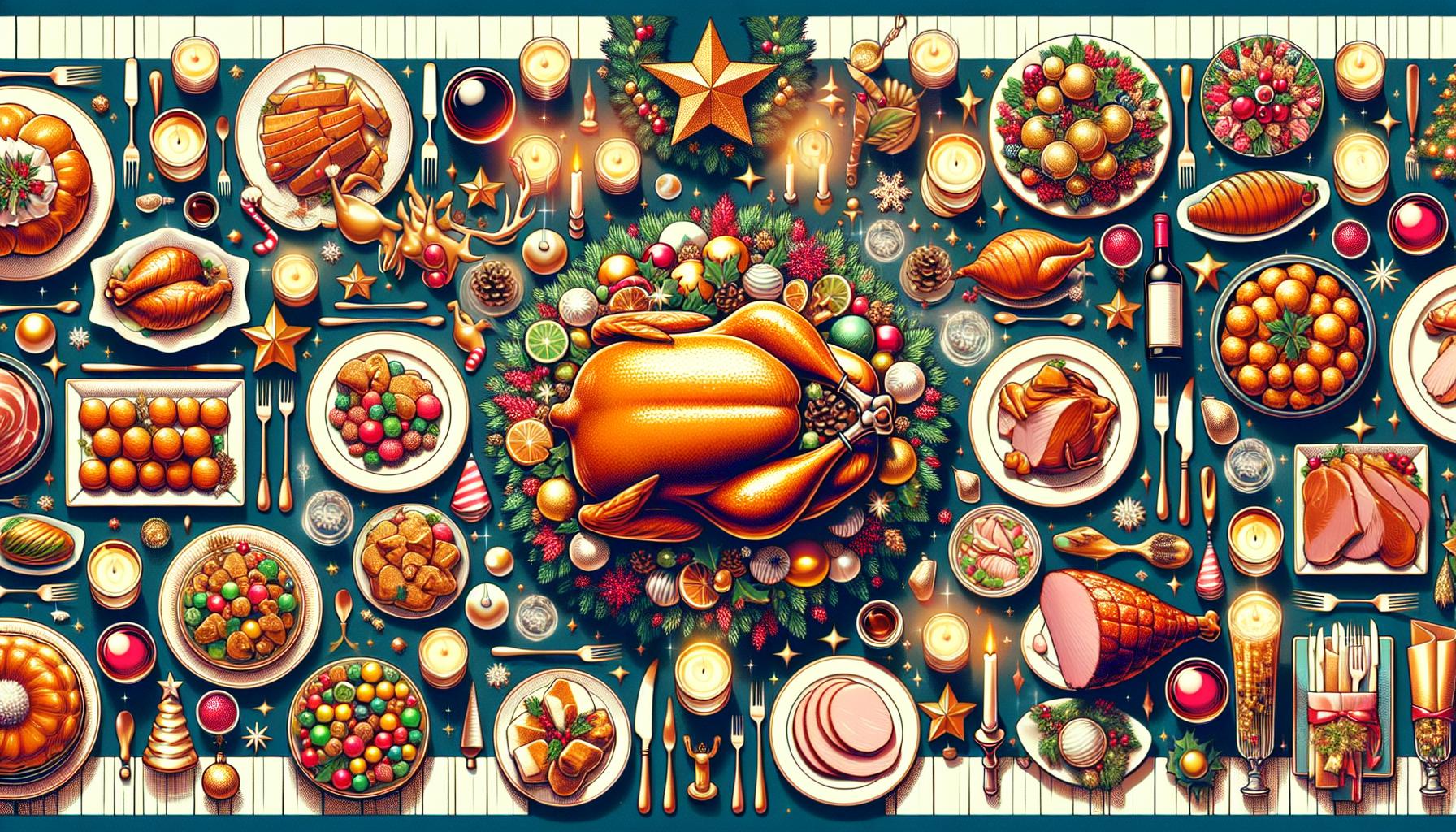
Christmas dinner tables around the globe showcase a variety of mouthwatering dishes. From savory roasts to sweet treats, these traditional meals bring families together and create lasting memories. Let's explore some popular Christmas dishes that grace holiday tables worldwide.
Roast Turkey and Stuffing
Roast turkey with stuffing is a Christmas staple in many English-speaking countries. This golden-brown bird, often the centerpiece of the feast, is typically filled with a flavorful mixture of bread, herbs, and seasonings. The crispy skin and juicy meat pair perfectly with cranberry sauce and gravy. Remember that one time Uncle Bob tried to deep-fry the turkey and nearly set the garage on fire? Classic holiday mishap!
Christmas Ham
Glazed ham takes center stage in many households during the holidays. This sweet and savory dish is often adorned with a sticky glaze made from brown sugar, honey, or maple syrup. Some families add a fruity twist with pineapple rings or cherries. It's like a edible present for your taste buds! Have you ever tried scoring the ham in a diamond pattern before glazing?
Fruitcake and Puddings
Love them or hate them, fruitcakes and puddings are Christmas classics. These dense, fruit-filled desserts are steeped in tradition and often soaked in brandy or rum. In the UK, Christmas pudding is a dark, rich dessert often served with brandy butter or custard. Meanwhile, Italian panettone and German stollen offer lighter, bread-like alternatives. Who's up for a fruitcake-tossing contest after dinner?
Thanksgiving Favorites in the United States
Thanksgiving in the United States is synonymous with a feast of traditional dishes that bring families together. Let's dive into two classic favorites that grace many American tables during this holiday.
Pumpkin Pie
Pumpkin pie is the quintessential Thanksgiving dessert. We love its smooth, creamy texture and warm spices that fill the air with the scent of fall. Made with pureed pumpkin, eggs, milk, and a blend of cinnamon, nutmeg, and ginger, this pie is a sweet end to any Thanksgiving meal. The flaky crust pairs perfectly with the rich filling, creating a balance of textures that keeps us coming back for more. Have you ever tried adding a dollop of whipped cream on top? It's like a cloud of happiness floating on a slice of autumn!
Hanukkah Specialties
Hanukkah, the Festival of Lights, brings with it a delightful array of traditional dishes. These foods, often fried in oil, symbolize the miracle of the oil that burned for eight days in the ancient Temple. Let's explore two beloved Hanukkah treats that light up tables and hearts during this joyous celebration.
Latkes (Potato Pancakes)
Latkes are crispy, golden potato pancakes that have become a Hanukkah staple. Grated potatoes mixed with onions, eggs, and a touch of flour create these savory delights. Fried until crisp on the outside and tender on the inside, latkes are a crowd-pleaser.
Ever tried to flip a latke and ended up with potato shreds all over the stovetop? We've all been there! It's part of the fun. Serve these crispy treats with applesauce or sour cream for a perfect balance of flavors.
What's your favorite latke topping? Are you team applesauce or team sour cream?
Sufganiyot (Jelly Doughnuts)
Sufganiyot are pillowy-soft, jelly-filled doughnuts that bring sweetness to Hanukkah celebrations. These round pastries are fried to golden perfection and filled with fruity jam or jelly. A dusting of powdered sugar adds the finishing touch.
Picture biting into a warm sufganiyah and feeling the sweet jelly ooze out. It's like a taste explosion in your mouth! But be careful – that powdered sugar has a sneaky way of ending up on your nose or shirt.
Here's a funny tidbit: In Israel, bakeries compete to create the most outrageous sufganiyot flavors. From bubblegum to caviar, these wild concoctions keep everyone guessing. What's the craziest doughnut flavor you've ever tried?
New Year's Eve and Day Culinary Traditions
As the clock strikes midnight on New Year's Eve, culinary traditions take center stage in celebrations worldwide. These customs not only satisfy our taste buds but also carry symbolic meanings for prosperity and good fortune in the coming year.
Black-Eyed Peas and Collard Greens
In the Southern United States, black-eyed peas and collard greens are must-haves on New Year's Day. These dishes are believed to bring luck and financial success. The peas represent coins, while the green leafy vegetables symbolize paper money. It's like eating your way to a prosperous future!
Ever tried to explain this tradition to someone from another region? Their confused looks are priceless! "You're telling me you eat beans for money?" Yes, we do, and we love every bite of it.
Twelve Grapes at Midnight
In Spain and many Latin American countries, revelers gobble down twelve grapes at the stroke of midnight. Each grape represents a month of the year, and eating them all is said to bring good luck for the next twelve months. It's a race against time and your gag reflex!
Picture this: You're at a New Year's party, champagne in one hand, a bunch of grapes in the other. The countdown begins, and suddenly you're stuffing grapes in your mouth like there's no tomorrow. It's hilarious, messy, and oh-so-fun!
The Role of Traditional Holiday Dishes in Cultural Identity
Traditional holiday dishes are more than just tasty treats; they're a delicious slice of our heritage. Ever wondered why grandma's special recipe feels like a warm hug? It's because these dishes are the secret ingredients in our cultural identity soup!
Picture this: You're sitting at the holiday table, surrounded by family, and there it is - that one dish that screams "home." Maybe it's a steaming bowl of matzo ball soup or a perfectly glazed ham. Whatever it is, it's not just food; it's a edible time capsule of your family's story.
These culinary traditions are like the DNA of our cultures. They're passed down from generation to generation, each family adding their own special twist. Remember that time Uncle Joe tried to "improve" the family stuffing recipe? Let's just say it wasn't stuffing anymore - more like a culinary adventure gone wrong!
But here's the thing: these dishes do more than fill our bellies. They connect us to our roots, helping us understand where we come from. They're a tasty history lesson on a plate. Who knew learning about your heritage could be so delicious?
Holiday dishes also act as cultural ambassadors. When we share these foods with friends from different backgrounds, we're giving them a taste of our world. It's like a potluck of cultures, where everyone brings a dish that tells their story.
And let's not forget the family drama that often comes with these dishes. Who gets to make grandma's famous pie this year? Will Aunt Sarah finally share her secret ingredient? It's like a soap opera, but with more butter and love.
These dishes are also great conversation starters. "Oh, you put raisins in your stuffing? That's... interesting." They give us a chance to learn about different traditions and maybe even start some new ones. After all, who says you can't have sushi alongside your turkey?
Conclusion
Traditional holiday dishes are more than just food; they're a celebration of our heritage and a bridge to our past. These culinary treasures bring families together, creating memories that last a lifetime. From Thanksgiving turkeys to Hanukkah latkes, each dish tells a story and carries symbolic meaning. As we gather around the holiday table, we're not just sharing a meal—we're preserving traditions, connecting generations, and strengthening our cultural bonds. So this holiday season, let's savor every bite and cherish the moments these beloved dishes help create.
Frequently Asked Questions
Why are traditional holiday dishes important?
Traditional holiday dishes are important because they evoke nostalgia, connect us to our cultural roots, and serve as a bridge between generations. These dishes act as "time machines," transporting us back to cherished memories with loved ones. They're not just about food, but about preserving culture, creating new memories, and keeping family traditions alive. Traditional dishes also foster a sense of belonging and identity during holiday celebrations.
What are some popular Christmas dishes around the world?
Popular Christmas dishes vary globally but often include roast turkey with stuffing in English-speaking countries, typically served with cranberry sauce and gravy. Glazed ham is another festive favorite. Many cultures have their own versions of fruitcakes and puddings, such as the rich Christmas pudding in the UK, Italian panettone, and German stollen. These dishes not only add to the festive atmosphere but also contribute to shared experiences and laughter during family gatherings.
What is the significance of pumpkin pie in American Thanksgiving?
Pumpkin pie is the quintessential Thanksgiving dessert in the United States. It's celebrated for its smooth, creamy texture and warm spices that embody the essence of fall. Made with pureed pumpkin and a blend of spices, this pie is a beloved conclusion to the Thanksgiving meal. Often enjoyed with a dollop of whipped cream, pumpkin pie adds to the joy of the occasion and is a symbol of traditional American holiday cuisine.
What are some traditional Hanukkah foods?
Two popular traditional Hanukkah foods are latkes and sufganiyot. Latkes are crispy potato pancakes often served with applesauce or sour cream. They're a staple of Hanukkah celebrations and can be challenging but fun to flip. Sufganiyot are jelly-filled doughnuts that add sweetness to the festivities. In Israel, bakeries often offer creative flavors of sufganiyot during the holiday season. These foods are integral to the celebration of the Festival of Lights.
What are some New Year's food traditions and their meanings?
New Year's food traditions often carry symbolic meanings for prosperity and good fortune. In the Southern United States, black-eyed peas and collard greens are eaten on New Year's Day, representing coins and paper money respectively. In Spain and Latin America, eating twelve grapes at midnight is believed to bring good luck for each month of the coming year. These traditions add a fun and meaningful element to New Year's celebrations.
How do traditional holiday dishes contribute to cultural identity?
Traditional holiday dishes serve as edible time capsules that connect us to our cultural roots and help us understand our heritage. They act as cultural ambassadors, allowing us to share our stories with others and fostering conversations about different traditions. These dishes often spark both nostalgia and new traditions within families. By preparing and sharing these foods, we preserve our cultural identity and create lasting memories that strengthen family and community bonds.


