

Teaching kids about kitchen safety creates a foundation for lifelong healthy habits and culinary confidence. We know how exciting it can be for children to help with meal preparation but keeping them safe while they learn is our top priority. From handling kitchen tools to understanding basic food safety these skills will serve them well throughout their lives.
We've gathered practical tips and guidelines to help parents and caregivers introduce children to kitchen activities safely. Whether your little one is just starting to show interest in cooking or already helps with simple tasks making safety education fun and engaging makes all the difference. How can we spark their curiosity while keeping them protected in the kitchen?
Key Takeaways
- Children should learn age-appropriate kitchen tasks, with supervised activities ranging from simple mixing for ages 3-5 to using basic appliances for ages 9-12
- Essential kitchen safety rules include proper hand washing, wearing closed-toe shoes, keeping hair tied back, and maintaining a safe distance from hot surfaces
- Sharp objects should be stored securely in locked drawers or mounted at least 5 feet high, with childproof locks on storage areas containing dangerous utensils
- Food safety fundamentals involve maintaining proper temperatures (below 40°F for cold foods, above 140°F for hot foods), using separate cutting boards, and refrigerating perishables within 2 hours
- Kitchen fire safety requires establishing a 3-foot "kid-free zone" around cooking areas, turning pot handles inward, and keeping flammable items away from heat sources
- Emergency preparedness includes knowing basic burn treatment procedures, having a well-stocked first aid kit, and keeping emergency contact numbers readily available
Why Teaching Kitchen Safety to Children Matters
Teaching kitchen safety to children creates a foundation for lifelong healthy cooking habits while preventing accidents. Safe kitchen practices empower kids to explore cooking with confidence under proper supervision.
Age-Appropriate Kitchen Tasks
Children develop kitchen skills at different rates based on their age level. Here's a breakdown of suitable kitchen activities:
Ages 3-5:
- Washing fruits and vegetables in cold water
- Mixing dry ingredients with a spoon
- Using cookie cutters
- Tearing lettuce for salads
Ages 6-8:
- Measuring dry and wet ingredients
- Cracking eggs into a separate bowl
- Using a butter knife to spread or cut soft foods
- Rolling dough or forming cookies
Ages 9-12:
- Using a peeler for vegetables
- Operating a hand mixer
- Following simple recipes independently
- Using a microwave with supervision
Kitchen Safety Rules Every Child Should Know
Clear safety guidelines protect children during kitchen activities:
Personal Safety:
- Wash hands with soap for 20 seconds
- Wear closed-toe shoes in the kitchen
- Keep hair tied back
- Use oven mitts for hot items
Equipment Safety:
- Turn pot handles toward the back of the stove
- Keep knives pointing away from the body
- Wipe spills immediately to prevent slips
- Maintain a 3-foot distance from hot surfaces
- Use separate cutting boards for raw meat and produce
- Check food temperatures with a thermometer
- Store perishables in the refrigerator within 2 hours
- Clean all surfaces before and after cooking
These rules create a secure environment where children can explore cooking skills with growing independence.
Creating a Kid-Safe Kitchen Environment

A kid-safe kitchen starts with strategic organization of tools equipment. Our focus lies on creating designated spaces that keep dangerous items out of children's reach while maintaining easy access to safe cooking supplies.
Safe Storage of Sharp Objects
Sharp objects pose significant risks in the kitchen. Store knives in a locked drawer or use magnetic strips mounted high on the wall, at least 5 feet from the ground. Place scissors graters peelers in secured containers above counter height. Here's how to manage sharp items:
- Install childproof locks on drawers containing sharp utensils
- Use knife blocks with safety covers on counter spaces
- Store specialty cutting tools in high cabinets
- Place can openers electric knives in locked storage areas
- Keep mandolines graters in secured upper shelves
Organizing Kitchen Equipment
Smart organization creates clear zones for different kitchen activities. Set up cooking stations with age-appropriate tools at child height:
- Lower cabinets: Store plastic containers mixing bowls kid-safe utensils
- Middle drawers: Place measuring cups spoons rolling pins cookie cutters
- Upper storage: Keep appliances cleaning supplies sharp tools
- Counter space: Designate specific areas for prep work mixing stations
- Accessibility items:
- Step stools with non-slip surfaces
- Pull-out drawers for easy reach
- Clear containers for dry ingredients
- Color-coded tools for different tasks
- Organized workspace markers
| Age Group | Safe Storage Height | Accessible Items |
|---|---|---|
| 3-5 years | Below 2 feet | Plastic bowls utensils |
| 6-8 years | Below 3 feet | Measuring tools spatulas |
| 9-12 years | Below 4 feet | Hand mixers cutting boards |
Essential Food Safety Guidelines
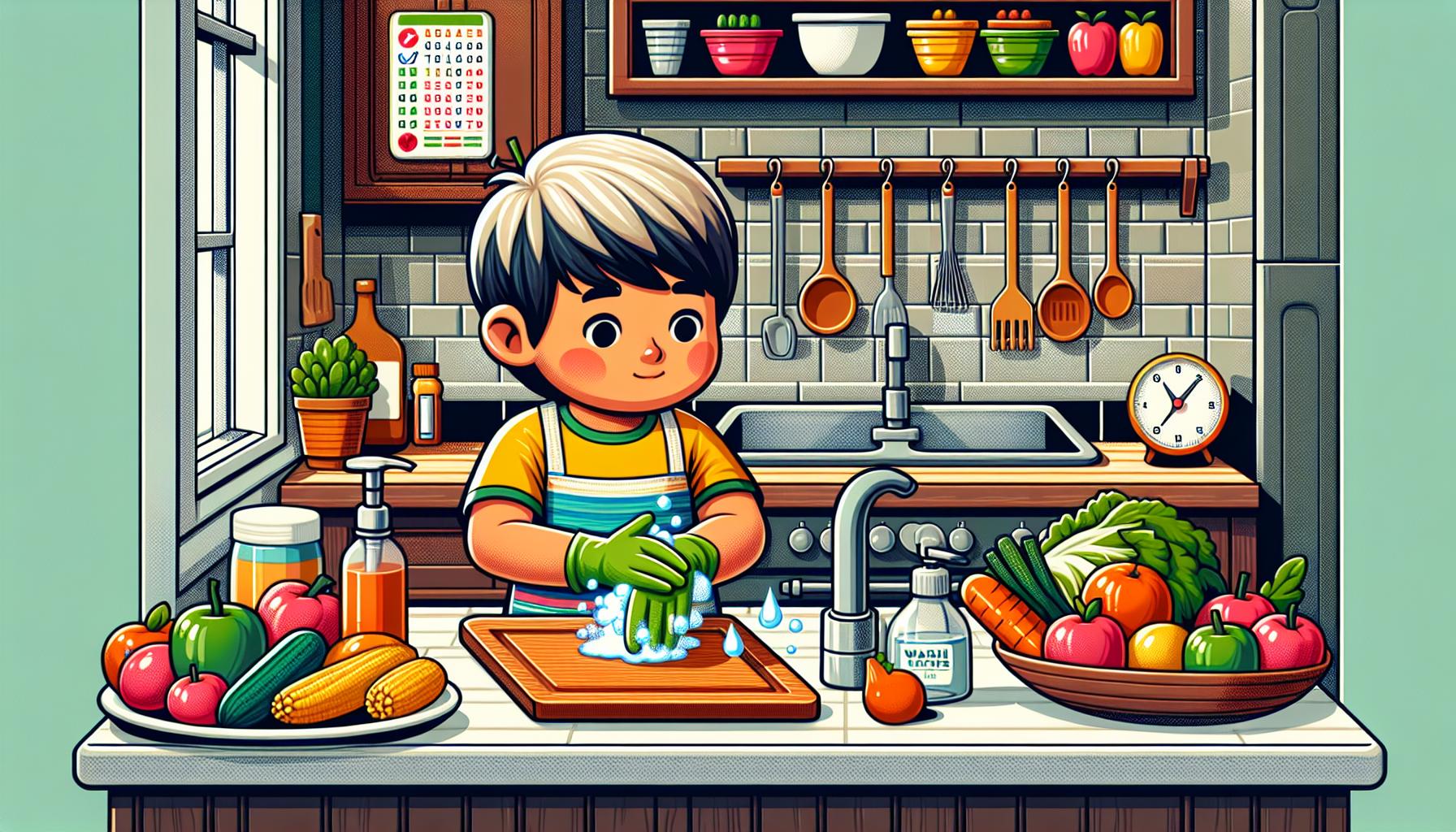
Food safety forms the cornerstone of kitchen education for kids. Teaching children proper food handling practices creates healthy habits that last a lifetime.
Hand Washing and Hygiene
Kids learn essential hygiene practices through proper handwashing techniques. Here's what children need to know about kitchen cleanliness:
- Wash hands with soap and warm water for 20 seconds before touching food
- Clean hands again after handling raw meat eggs or fish
- Dry hands with paper towels or clean cloth towels
- Keep hair tied back or wear a hair covering while cooking
- Use separate cutting boards for raw meat and produce
- Wash fruits and vegetables thoroughly under running water
Food Temperature Basics
Understanding safe food temperatures helps children recognize when food is properly cooked. Key temperature guidelines include:
| Food Type | Safe Internal Temperature (°F) |
|---|---|
| Ground meat | 160°F |
| Poultry | 165°F |
| Fish | 145°F |
| Leftovers | 165°F |
Safe food handling practices:
- Use a food thermometer to check internal temperatures
- Keep cold foods below 40°F
- Store hot foods above 140°F
- Refrigerate perishables within 2 hours
- Cool large portions in shallow containers
- Never taste food to check if it's spoiled
These guidelines teach children the importance of proper food handling while making safety practices part of their regular kitchen routine. Simple temperature rules and hygiene habits create a foundation for safe cooking experiences.
Fire and Heat Safety in the Kitchen
Kitchen fire and heat safety teaches kids proper precautions around hot surfaces and cooking equipment. Learning these essential rules helps prevent burns and accidents while building confidence in the kitchen.
Using the Stove Safely
- Place all pot handles turned inward on the stove to prevent accidental spills
- Keep a 3-foot "kid-free zone" around active cooking areas
- Use back burners whenever possible to minimize reach
- Teach children to recognize hot indicator lights on electric stoves
- Set clear rules about never touching the stovetop without adult supervision
- Store oven mitts within easy reach near the stove
- Keep flammable items like paper towels away from burners
- Show kids how to test pan temperature safely using water droplets
- Place the microwave at a child-safe height (3-4 feet from the ground)
- Use microwave-safe containers marked for heating food
- Remove hot items with oven mitts or thick towels
- Open heated containers away from the face to avoid steam burns
- Check food temperature before eating (let stand 1-2 minutes)
- Never operate an empty microwave
- Remove metal items like twist ties or foil before heating
- Teach kids the stop button location for quick responses
| Safe Food Temperature Guidelines | Time/Temperature |
|---|---|
| Hot liquids cool-down time | 3-5 minutes |
| Safe container testing temp | 120°F (48°C) |
| Kid-safe food serving temp | 135°F (57°C) |
| Steam release waiting time | 30 seconds |
Emergency Response and First Aid
Quick response to kitchen accidents reduces injury severity in children. A well-stocked first aid kit paired with basic knowledge of emergency procedures creates a safer cooking environment.
Basic Burns Treatment
Kitchen burns require immediate action to minimize damage. Here's how to treat minor burns:
- Cool the burn under cold running water for 10-20 minutes
- Remove any jewelry or tight items near the burn area
- Cover the burn with a clean, non-stick gauze bandage
- Apply aloe vera gel or burn cream after cooling
Don't:
- Put butter ice or any oily substances on burns
- Pop any blisters that form
- Remove clothing stuck to the burn
- Use cotton balls or fluffy dressings
When to Call for Help
Call emergency services (911) immediately if:
- Burns show these signs:
- Larger than 3 inches in diameter
- Deep or charred appearance
- White waxy or dark brown color
- Located on face hands feet or genitals
- Additional emergency situations include:
- Choking or difficulty breathing
- Severe cuts with heavy bleeding
- Head injuries from falls
- Allergic reactions to food
- Signs of food poisoning
- Local poison control: 1-800-222-1222
- Family doctor's office
- Parents' cell phone numbers
- Trusted neighbor's contact
| Burn Severity | Characteristics | Action Required |
|---|---|---|
| First-degree | Red painful skin | Home treatment |
| Second-degree | Blisters swelling | Medical evaluation |
| Third-degree | White charred skin | Emergency care |
Conclusion
Teaching kids kitchen safety isn't just about preventing accidents - it's about empowering them to become confident and capable cooks. By establishing clear guidelines organizing our kitchens thoughtfully and demonstrating proper safety techniques we're laying the groundwork for a lifetime of safe and enjoyable cooking experiences.
Remember that every child learns at their own pace. Starting with age-appropriate tasks and gradually increasing responsibility will help build their confidence while keeping them safe. Our role as parents and caregivers is to create an environment where kids can explore discover and learn while staying protected from potential kitchen hazards.
Let's make kitchen safety education an engaging and positive experience that sparks a lifelong love for cooking in our children.
Frequently Asked Questions
At what age can children start helping in the kitchen?
Children can start helping in the kitchen as early as age 3. Start with simple tasks like washing fruits and vegetables, mixing dry ingredients, or using cookie cutters. As they grow older, gradually introduce more complex tasks that match their developmental abilities and motor skills.
What are the basic safety rules every child should know in the kitchen?
Essential rules include washing hands before cooking, wearing closed-toe shoes, keeping hair tied back, and maintaining a safe distance from hot surfaces. Children should also learn to handle knives properly, point sharp objects away from themselves, and never use appliances without adult supervision.
How should kitchen tools be organized for child safety?
Organize tools based on age-appropriate accessibility. Store dangerous items like sharp knives in locked drawers or high places. Keep safe cooking supplies within easy reach, with items for younger children (ages 3-5) below 2 feet and tools for older children (ages 9-12) below 4 feet.
What food safety practices should children learn?
Children should learn proper handwashing (20 seconds with soap and warm water), avoiding cross-contamination between raw and cooked foods, and understanding safe food temperatures. They should also know to wash hands after handling raw meat, eggs, or fish.
How can parents create a kid-friendly cooking environment?
Create designated cooking zones, use childproof locks on dangerous cabinets, and maintain a clear workspace. Keep a sturdy step stool available, ensure good lighting, and establish a 3-foot "kid-free zone" around hot cooking areas.
What should be done in case of a kitchen accident?
Keep a well-stocked first aid kit easily accessible. For minor burns, cool the area under running water and apply a clean bandage. For serious injuries, call emergency services immediately. Always keep emergency contact numbers visible in the kitchen.
What are appropriate cooking tasks for different age groups?
Ages 3-5: Washing produce, mixing dry ingredients, using cookie cutters
Ages 6-8: Measuring ingredients, cracking eggs, using butter knives
Ages 9-12: Using peelers, operating hand mixers, following simple recipes independently
How should children be taught about fire and heat safety?
Teach children to recognize hot surfaces, understand stove indicator lights, and maintain safe distances from cooking areas. Show them how to turn pot handles inward and never use the stove or microwave without adult supervision.


